
32nd International Input-Output Association Conference
14th Edition of the International School of I-O Analysis
11th Jornadas de Análisis Input Output
22nd - 26th June 2026, Seville, Spain
|
|
 |

Call for Papers
Aims for the Conference
The 32nd International Input-Output Conference / 11th SHAIO Conference will continue the legacy of fostering innovation, collaboration, and impactful research in the field of Input-Output Economics. Following the success of the last conference in Europe in 2023, we are thrilled to bring this vibrant community to Seville, Spain, a city rich in history, culture, and a growing hub for economic research. This will be the first joint IIOA and SHAIO conference, marking a significant milestone in the global exchange of ideas.
The main conference theme is: "Advancing policy resilience through input-output economics: global, regional, and local perspectives". Input-Output Economics remains a cornerstone for understanding complex economic systems and informing policy decisions. From climate change mitigation to the green transition, digitalisation, and post-pandemic recovery, input-output methods provide critical insights into the interdependencies shaping our economies. The 2026 conference invites submissions that explore how Input-Output Economics can enhance policy resilience at global, national, and regional levels.
We welcome contributions across three core dimensions of Input-Output Economics:
Statistics:
Innovations in data collection, harmonisation, and integration (e.g., thematic accounts – orange economy, cultural and recreational tourism, space economy –, environmental extensions, SMEs); challenges in measuring emerging sectors (e.g., AI, renewable energy, gig economy); cross-border statistical consistency and international comparability, among other topics.
Analysis:
Applications to policy challenges (e.g., carbon neutrality, circular economy, trade dynamics); regional and sectoral vulnerability analyses (e.g., supply chain shocks, energy transitions); equity and distributional impacts of policy interventions, among other topics.
Modelling:
Policy impact simulations (CGE, IAM, econometric IO, scenario analysis), computational advances (e.g., integrated models, machine learning integration); linkages to broader economic frameworks (e.g., sustainability goals, SDGs), among other topics.
Why submit to Seville 2026?
Global and local relevance: Connect with scholars and policymakers addressing pressing economic and environmental challenges.
Interdisciplinary exchange: Share insights with experts in economics, sustainability, data science, and policy design.
Networking opportunities: Collaborate with early-career researchers and seasoned academics in a dynamic, inclusive environment.
Legacy and innovation: Celebrate the first joint IIOA-SHAIO conference in history while advancing its future through cutting-edge methodologies.
Who Should Participate?
We encourage submissions from economists, data scientists, policymakers, researchers, and graduate students. Whether you are exploring theoretical advancements, applied policy analyses, or methodological innovations, the 2026 conference offers a platform to amplify your work. The languages of the conference will be English and Spanish.
The 2026 conference will be held in the heart of Andalusia, blending academic rigor with the cultural vibrancy of Seville. This is your opportunity to contribute to shaping the next generation of Input-Output research and policy frameworks. We look forward to your participation in what promises to be a landmark event for the Input-Output community!
Mode of Participation
Organised Sessions
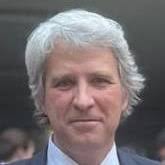
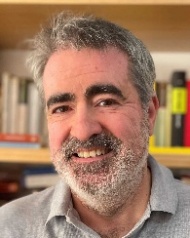
We strongly encourage all members to suggest and organise special sessions for the IIOA-SHAIO Conference. In the past, these sessions have been most successful in terms of the number of attendants and participant interaction. Please send proposals for thematic sessions or sets of sessions well before the deadline to the Chairs of the Scientific Programme Committee (SPC), Dr. José M. Rueda-Cantuche, via e-mail (JoseM.RCantuche@ec.europa.eu) and to Dr. Alfredo Mainar (amainar@us.es), and include all of the following:
|
  |
Once the session proposal is accepted by the SPC Chairs, the abstracts of individual articles should follow the information as specified below for each of the presentations planned for the proposed sessions.
Individual submissions
We ask that authors submit their names, institutional affiliation(s), the paper title and an abstract of the presentation (not less than 500 words but not more than 800 words) and select a topic from the list provided (submissions can also be made in Spanish).
Abstracts are individually reviewed by members of the scientific committee before they can be accepted for inclusion in the conference program. Authors are requested to provide in their abstracts the following information about the submitted articles:
- the research question;
- the method used;
- the data used (if any); and
- the novelty of the research.
Failing to do this may disadvantage the selection of the article. On the other hand, if a corresponding full paper (of at least 2,000 words) is accompanied at the time of abstract submission, it will significantly increase the possibility of acceptance.
Each author is permitted to present a maximum of two papers at the conference, one maximum in an Organised Session and one maximum in a normal session. Authors are allowed to be a co-author on several submitted papers.
Paper submissions
Please follow the navigation through our online article submission system COPASS.
Please fill in the requested data (title, abstract, names of all authors, e-mail address, preferred day of presentation, etc.) and select an appropriate topic for the abstract. Once the abstract is accepted, please submit the full paper via COPASS by the specified deadline. A paper with more than 2,000 words shall be considered a full paper for the submission.
Please note that the following three conditions are the NECESSARY CONDITIONS for securing a spot on the final program.
Also, the SPC Chair reserves the right to withdraw any article from the program if it is found that the corresponding presenter shall not show up to the conference.
Due to an increasing number of participants and papers at IIOA and SHAIO conferences, the SPC puts every effort to make the best use of available slots in the program, by eliminating or at least minimising no-shows as much as they can. We sincerely ask for the earliest notification to the SPC Chair (one week beforehand at least) if a presenter finds him/herself unavailable for a presentation at the Conference.

|

|

|

|

|